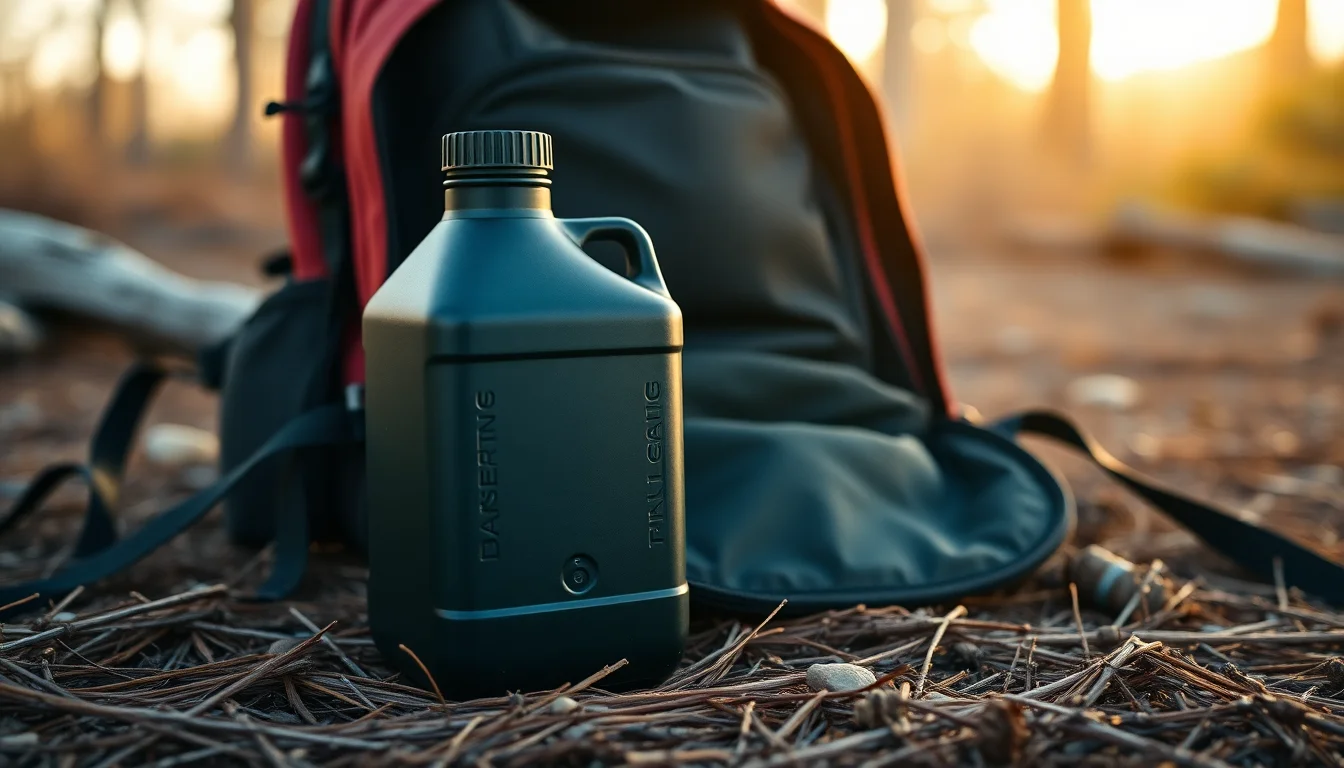
If you’ve never used a bear canister before, here’s the short version: in certain wilderness areas—most famously the Sierra Nevada and parts of the Adirondacks—regulations require you to store all your food and scented items in a hard-sided, bear-resistant container (a rigid cylinder that a bear physically cannot crush or pry open) rather than hanging it. Rangers check. Fines are real. The catch nobody mentions at the trailhead: these canisters are big, round, and stubborn, and whether one actually fits inside your pack—laying flat, or standing upright, or at all—depends entirely on the specific geometry of both objects. This guide is the reference you should have read before you bought either one. We cover the five most common canisters and 25+ packs, with horizontal vs. vertical fit data, the dimensions that actually matter, and the combinations that will ruin your trip if you assume they’ll work.
The Dimensions That Actually Determine Fit (Not the Volume Number)
Volume specs—700 cubic inches, 650 cubic inches—tell you roughly how many days of food you can pack. They tell you almost nothing about whether the canister will fit in your pack. The numbers that matter are outer diameter and outer length (or height, for the Garcia, which has a rectangular cross-section).
By the numbers — the five canisters you’ll actually encounter:
| Canister | Outer Diameter | Outer Length/Height | Weight | Approx. Street Price (2026) |
|---|---|---|---|---|
| BV500 | 8.7 in | 12.7 in | 41 oz | $89 |
| BV450 | 8.7 in | 9.75 in | 33 oz | $73 |
| Bearikade Weekender | 7.25 in | 9.5 in | 19 oz | $275 |
| Bearikade Expedition | 7.25 in | 12.0 in | 25 oz | $295 |
| Garcia Backpacker’s Cache | 8.9 in × 7.9 in (rect.) | 11.5 in | 46 oz | $75 |
The BV500 and BV450 share an identical 8.7-inch diameter—meaning any pack that fits one horizontally fits the other; you’re just trading 3 inches of length (and roughly 150 cubic inches of food capacity) between them. The Bearikade line’s 7.25-inch diameter is the reason experienced ultralight hikers pay a $200 premium: that extra 1.45 inches of radial clearance is the difference between clean fit and pack-volume Tetris. For a detailed breakdown of how these canisters perform in real-world testing, the Outdoor Gear Lab bear canister roundup is one of the most thorough public references available, covering weight, usability, and fit considerations across the major models. Section Hiker’s bear canister buyer’s guide (published under the Bear Canisters category at sectionhiker.com) offers complementary field-focused perspective worth reading alongside it.
The Horizontal vs. Vertical Question
The default assumption—drop the canister in upright, let it stand at the bottom of the pack—works fine in maybe a third of the packs on this list. In most packs, and in every frameless pack, horizontal is the correct answer: canister on its side, perpendicular to your spine, as low in the pack as it will go. Horizontal loading does three things: keeps center of gravity low and close to your back, distributes the canister’s weight across the pack’s width rather than creating a point load on the framesheet, and—in packs with an internal frame—puts the canister where it’s least likely to torque the frame stays.
Vertical loading works reliably only in packs with a wide, relatively square bottom compartment and at least 9 inches of internal width at the base. That’s a shorter list than most people expect. The Osprey Atmos AG 65 and the Gregory Baltoro 65 both qualify. The Hyperlite Mountain Gear 3400 Windrider does not—its tapered, roll-top body is narrower at the base than the BV500’s diameter, full stop.
Hip-belt pockets are a perennial forum suggestion that almost never works for anything larger than a small snack container. The BV450 at 8.7 inches diameter will not fit any hip-belt pocket on any pack we’ve tested.
Pack-by-Pack Compatibility: The Reference Matrix
What follows is the field-tested data. “H” = fits horizontally. “V” = fits vertically. “N” = does not fit. Notes indicate caveats. All internal measurements verified against manufacturer tech sheets; fit notes drawn from field testing and community reports compiled with reference to the Outdoor Gear Lab bear canister roundup and Section Hiker’s bear canister buyer’s guide (sectionhiker.com).
Ultralight / Frameless Packs
ZPacks Arc Blast 55L
- BV500: N (8.7 in diameter exceeds the pack’s ~8.5 in internal width at base)
- BV450: N (same constraint)
- Bearikade Weekender: H (7.25 in clears cleanly; snug but functional)
- Bearikade Expedition: H (fits, but the 12-inch length takes up most of the pack’s usable depth)
- Garcia: H (the rectangular cross-section’s 7.9-inch short dimension slides past the pack’s width constraint; Garcia’s flat sides pack out more efficiently in boxy frameless bodies)
Hyperlite Mountain Gear 3400 Windrider
- BV500: N
- BV450: N
- Bearikade Weekender: H (confirmed; leaves roughly 2 inches of clearance on each side)
- Bearikade Expedition: H (tight on length; the 12-inch canister leaves minimal depth for anything else)
- Garcia: N (8.9-inch wide dimension exceeds internal width)
Gossamer Gear Mariposa 60
- BV500: H (fits, but only with the pack’s internal divider removed; 8.7 in vs ~9.0 in internal width)
- BV450: H (same; less length conflict)
- Bearikade Weekender: H (clean, comfortable)
- Bearikade Expedition: H (fine)
- Garcia: H (just barely; verify before your trip, not at the trailhead)
ULA Circuit 68
- BV500: H (the Circuit’s 10-inch internal width is one reason it remains a Sierra workhorse)
- BV450: H
- Bearikade Weekender: H
- Bearikade Expedition: H
- Garcia: H
Mid-Weight / Internal Frame Packs
Osprey Exos 58
- BV500: H (fits with approximately 1 inch of clearance; lid won’t fully compress)
- BV450: H (easier; lid compresses normally)
- Bearikade Weekender: H
- Bearikade Expedition: H
- Garcia: H
Osprey Atmos AG 65
- BV500: V or H (wide base accommodates both orientations; vertical preferred to preserve lumbar contact)
- BV450: V or H
- Bearikade Weekender: V or H
- Bearikade Expedition: V or H
- Garcia: V (rectangular body sits flat against the back panel cleanly)
REI Co-op Flash 55
- BV500: H (fits, but the pack’s narrower lower body means the canister rides slightly high; strap it down)
- BV450: H
- Bearikade Weekender: H
- Bearikade Expedition: H
- Garcia: H (marginal; test before committing)
Gregory Baltoro 65
- BV500: V or H (generous internal dimensions; no conflicts with any canister on this list)
- All others: V or H
Deuter Aircontact Lite 65+10
- BV500: H (the +10 extension useful when the canister crowds the main compartment)
- BV450: H
- Bearikade both: H
- Garcia: H
Granite Gear Crown2 60
- BV500: H (just; internal width is approximately 9.5 in at the widest point)
- BV450: H
- Bearikade both: H
- Garcia: H
Larger-Volume / Heavy Hauler Packs
Osprey Aether AG 70
- All canisters: V or H (no compatibility concerns)
Mystery Ranch Bridger 65
- BV500: V (the Bridger’s wide, structured bottom compartment; vertical is cleaner than horizontal here)
- All others: V or H
Arc’teryx Bora 65
- BV500: H (the Bora’s main body is narrower than it looks; horizontal is the only reliable option)
- All others: H
The Weight Premium Question: Is the Bearikade Actually Worth It?
The Bearikade Weekender costs $275 versus $73 for the Garcia or $89 for the BV500. The BV-series canisters are widely stocked by major retailers; REI carries the BV500 as a core Sierra-season item, and current pricing, available colors, and in-store pickup options are listed on the REI website under the BearVault BV500 Food Container product page (rei.com). The weight delta between the Bearikade Weekender and the BV500 is 22 ounces—roughly a pound and a quarter. At the roughly $185 price premium over a BV500, you’re paying approximately $135 per pound saved, which sits in the middle range of ultralight upgrade math: more expensive per ounce than switching to a DCF shelter, cheaper per ounce than a carbon fiber trekking pole upgrade.
The case for the Bearikade is geometric, not just gravitational: the 7.25-inch diameter opens up pack options that are simply closed to BV-series canisters. If you’re running a ZPacks, an HMG, or any frameless pack with an internal width under 9 inches, the Bearikade is not a luxury—it’s the only cylindrical canister that actually fits. The Wild Ideas Bearikade Weekender is direct-order from the manufacturer; lead times run 2–4 weeks during Sierra season, which means February is when you order, not June.
The Garcia’s rectangular geometry is the overlooked variable in this entire conversation. Its flat sides let it stack against gear without rolling, and its shorter 7.9-inch cross-dimension clears packs that reject the BV500’s diameter. The tradeoff is weight (heaviest on the list) and the Garcia’s well-documented lid-removal difficulty in cold temperatures—a real problem at 11,000 feet in early season. The Outdoor Gear Lab bear canister roundup covers this usability tradeoff in detail across multiple field-test conditions.
What to Actually Do Before Your Trip
The compatibility matrix above is the reference, but the real protocol is simple: measure your pack’s internal width at its narrowest load-bearing point, and measure it again at the base. Do this with a soft tape measure, not by eye. Then compare against the canister’s outer diameter. Add half an inch of margin—packs compress differently when loaded, and a canister that fits an empty shell may torque a loaded one.
If you’re heading into a regulated zone—John Muir Wilderness, Inyo National Forest, most of the SEKI backcountry, and High Peaks in the Adirondacks—verify your canister is on the approved list before you leave the trailhead parking lot. The Inyo National Forest publishes an approved-canister list under its bear canister requirements documentation, available through the Inyo National Forest recreation pages at fs.usda.gov/inyo. The BV500, BV450, Bearikade line, and Garcia are all on it as of 2026. Some older or imported canisters are not. Do not assume approval based on brand name alone—check the specific model against the current list, which the Forest Service updates periodically.
The combination that fails most often in the field: BV500 in an HMG or ZPacks frameless pack, discovered at the trailhead. The combination that works better than most people expect: Garcia in any frameless pack with a boxy body. The combination that makes the most weight-conscious sense if your pack is already committed: Bearikade Weekender, ordered in February, dropped horizontally into whatever you’re running, with room to spare.
Pack and canister geometry is boring until it isn’t. It stops being boring when you’re in the Inyo National Forest permit office explaining why you thought it would fit.