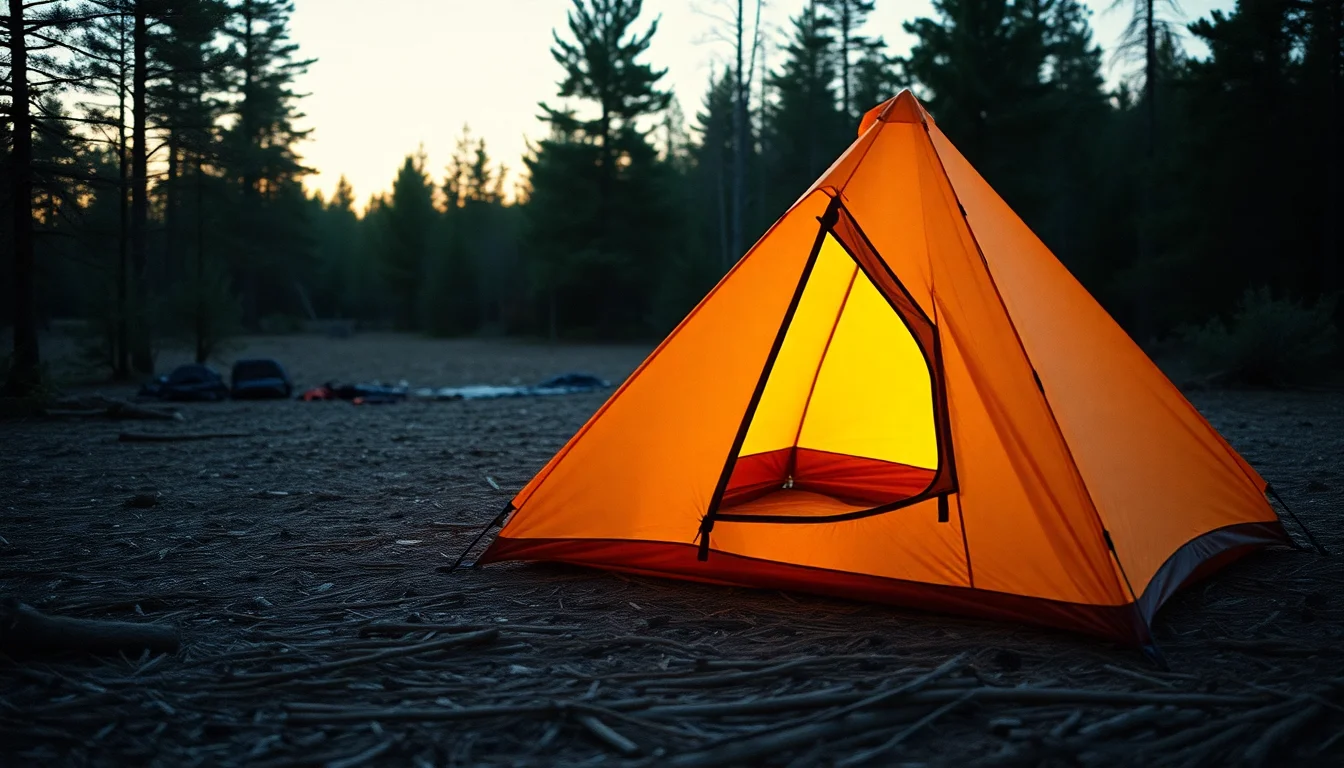
A backpacking tent is the piece of gear you’re trusting with your sleep — and your safety if the weather turns. Unlike a day pack you grab off the shelf, a tent decision involves juggling three numbers that rarely move in the same direction at the same time: trail weight (how many ounces the whole system actually weighs when you put it on a postal scale, not the optimistic figure on the hang tag), floor area (the square footage inside where you and your gear actually live), and durability (whether the seams and fabric hold up after fifty nights, not five). Under $500, you have real options across three shelter styles — freestanding tents (they stand on their own poles and can be moved once pitched), semi-freestanding designs (need a stake or two to hold their shape), and trekking-pole shelters (use the poles you’re already carrying, saving significant weight). This guide cuts through eight of the best, with real trail weights, honest size assessments, and clear tradeoffs so you can match the tent to your actual trip profile.
How We Sorted These Eight Tents
We weighted four factors, in this order: verified trail weight (the full system minus stuff sack, weighed on a postal scale or sourced from trusted independent reviews), usable interior space relative to the weight penalty, storm credibility (seam-taped fly, structural guyouts, pole geometry under load), and value — meaning durability per dollar across a realistic 200-night lifespan.
Freestanding designs dominate the mainstream market because they pitch on any surface — rock, snow, a bear box lid if you’re creative — but the poles cost you weight. Semi-freestanding and trekking-pole shelters earn that weight back fast. The question is whether your terrain and your comfort with staking allow it.
A quick benchmark before the list:
By the numbers: what “good” looks like under $500
- Trail weight under 3 lb for a 2-person freestanding tent = genuinely competitive
- Trail weight under 2 lb for a 2-person trekking-pole tent = ultralight territory without going full bivy
- Floor area: 28–32 sq ft for two people is functional; under 26 sq ft and you’re choosing weight over comfort
- Fly-to-floor waterproof rating: 1,500mm HH minimum for 3-season; 3,000mm+ for extended shoulder-season use
The Eight Tents, Ranked
1. Durston X-Mid 2 Pro — Best Overall Value Under $500
Price: ~$465 direct from Durston
Trail weight: 27.5 oz (780g) — two-person
Floor area: 32 sq ft
Style: Trekking-pole, semi-freestanding
Amazon: https://www.amazon.com/dp/B0BQZK9XTD
The X-Mid 2 Pro uses 20D silpoly (the standard version) or DCF (the Pro, which pushes toward $500) and its cross-pole geometry is genuinely clever — the X-pitch pulls the fly taut automatically, reducing the fussy tensioning that plagues most trekking-pole shelters. Section Hiker (sectionhiker.com) has published multi-night field coverage of the X-Mid 2 Pro, testing it through sustained rain in the White Mountains and finding no pooling at the seams. At 32 sq ft of floor space for under 28 oz, the geometry math is hard to beat.
One-line verdict: The most space-per-ounce shelter in this price range; buy it if you’re comfortable with trekking poles and care about the weight-to-volume ratio above everything else.
2. Big Agnes Copper Spur HV UL2 — Best Freestanding Pick
Price: ~$499 (current pricing at Backcountry.com’s backpacking tents section and Big Agnes direct)
Trail weight: 2 lb 10 oz (1,191g)
Floor area: 29 sq ft
Style: Freestanding double-wall
Amazon: https://www.amazon.com/dp/B07KGVH7YN
The Copper Spur has earned its reputation over several revisions. The HV (High Volume) geometry — a nearly vertical wall design — recovers usable headroom that traditional dome shapes waste in the corners. Outdoor Gear Lab’s multi-year best backpacking tent roundup has consistently flagged it as the benchmark freestanding tent in this class. The 15D fly is the durability weak point; it’ll outlast most trips but deserves a groundsheet on talus.
One-line verdict: The freestanding tent to beat at this price — pick it if you camp on varied surfaces (rock, snow) where staking isn’t reliable and you want to pitch fast.
3. MSR Hubba Hubba 2 — Best Storm Credibility in a Freestanding Design
Price: ~$469 at Backcountry.com
Trail weight: 2 lb 13 oz (1,270g)
Floor area: 29 sq ft
Style: Freestanding double-wall
Amazon: https://www.amazon.com/dp/B07TTFBVKQ
The Hubba Hubba’s pole geometry — a crossing hub design with wing guyouts — handles 40+ mph gusts better than most shelters in this category. MSR’s Easton Syclone poles are stiffer than the DAC Featherlite used in competing tents, which matters when the fly is taking lateral load in a sustained wind event. The tradeoff is about 3 oz heavier than the Copper Spur. Two 8.5 sq ft vestibules (one per door) give you genuine gear staging — wet boots, a wet pack lid, poles — without crowding the interior.
One-line verdict: Pay the 3-oz penalty over the Copper Spur if you’re doing shoulder-season trips or exposed ridgeline camps where storm resilience matters more than shaving every gram.
4. REI Co-op Quarter Dome SL 2 — Best Budget-Conscious Freestanding Option
Price: ~$329 (REI Co-op Quarter Dome SL 2, available at REI retail and rei.com — search “Quarter Dome SL 2” for current pricing)
Trail weight: 2 lb 14 oz (1,304g)
Floor area: 27.7 sq ft
Style: Semi-freestanding
Amazon: https://www.amazon.com/dp/B09G3KXMWJ
At $329, the Quarter Dome SL 2 leaves $170 in your pocket versus the top picks — money that can go toward a better sleeping system. REI’s in-house construction is honestly competitive with the premium brands here; the 20D ripstop nylon fly is seam-taped and the single hub keeps setup under four minutes. It’s semi-freestanding (needs two stakes to stand), which trips up first-timers but is a non-issue on established sites. Backpacker Magazine’s best tents guide has recognized the Quarter Dome line as a top value option in the freestanding category.
One-line verdict: The right call if you’re upgrading from a heavy car-camping tent and want sub-3-pound performance without the flagship price tag.
5. Zpacks Duplex — Best Ultralight Two-Person Shelter
Price: ~$499 direct from Zpacks
Trail weight: 19 oz (539g)
Floor area: 28 sq ft
Style: Trekking-pole, non-freestanding
Amazon: Listed as Zpacks Duplex Tent — verify current ASIN at time of purchase
At 19 oz for a two-person shelter, the Duplex sits in a different weight class entirely. It’s DCF throughout — the same material used in ultralight dry bags — which means it won’t absorb water, won’t stretch when wet, and will outlast nylon in UV if you store it properly. The 0.51 oz/yd² DCF floor is the durability conversation you need to have with yourself: it’s impressively light and impressively fragile on sharp granite; a $35 Tyvek groundsheet eliminates the problem. Setup requires exactly the right pole height (typically 125cm) and practice — this is a tent that rewards a few backyard pitches before your first alpine start.
One-line verdict: If you’re serious about ultralight and already hike with trekking poles, nothing at this price gets you a two-person shelter this light — but it demands more setup discipline than any freestanding option.
6. Nemo Hornet Elite OSMO 2P — Best Weight-to-Feature Ratio for Solo+
Price: ~$499 at Backcountry.com
Trail weight: 1 lb 13 oz (822g)
Floor area: 28 sq ft
Style: Freestanding
Amazon: https://www.amazon.com/dp/B0BVFX1T93
Nemo’s OSMO fabric is a hybrid nylon-polyester blend that resists the wet-sag you get with traditional nylon flies after a night of condensation. The Hornet Elite 2P is the lightest freestanding tent on this list — under 1 lb 14 oz — while remaining genuinely freestanding with DAC poles. The Y-beam pole geometry creates vertical walls similar to the Copper Spur. The floor is 15D, so the groundsheet caveat applies here too.
One-line verdict: The Hornet Elite makes sense if you want the convenience of freestanding with ultralight numbers — it’s the best bridge between the two worlds on this list.
7. Black Diamond Hilight 3-Season 2P — Best for Rugged Terrain and Shoulder Season
Price: ~$429 at Backcountry.com
Trail weight: 2 lb 15 oz (1,332g)
Floor area: 28.7 sq ft
Style: Freestanding
Heavier than most options here, the Hilight earns its weight in structural robustness. The DAC poles are a larger diameter than standard 3-season designs, and Black Diamond has over-engineered the stake-out points for high-wind performance. If your regular routes include passes above 11,000 feet or you’re regularly camping in the North Cascades or the Wind Rivers in August when thunderstorms are part of the deal, this tent’s extra beef is worth the gram penalty.
One-line verdict: Skip it for summer Sierra trips; consider it seriously if high-wind and wet-snow exposure is part of your regular season.
8. Six Moon Designs Lunar Solo — Best Single-Person Ultralight Value
Price: ~$195 direct from Six Moon Designs
Trail weight: 17 oz (482g)
Floor area: 21 sq ft (solo)
Style: Trekking-pole
This list runs two-person by default, but the Lunar Solo deserves a mention for solo hikers because nothing in its price band competes with 17 oz and a $195 price. Silnylon construction (not DCF) means it sags slightly when wet, but a taut pitch at setup and a quality stake job solves 90% of that. Outdoor Gear Lab’s best backpacking tent roundup has noted it as a benchmark value solo option in its category coverage.
One-line verdict: Solo hikers making their first ultralight transition should start here — spend the $300 you save on a down quilt.
How to Match Tent to Trip Profile
Here’s the decision framework, stated plainly:
If your camp surfaces are unpredictable (talus, snow, sandy desert): Choose a freestanding design. Copper Spur HV UL2 or MSR Hubba Hubba 2.
If you always hike with trekking poles and your sites are soil or established tent pads: The X-Mid 2 Pro gives you the best interior space-to-weight ratio on this list. If budget is tighter, the Lunar Solo handles solo missions for under $200.
If shoulder-season performance is the priority: MSR Hubba Hubba 2 for its pole geometry and vestibule volume. Black Diamond Hilight if you’re in persistently high-wind terrain.
If you’re on the ultralight transition and want to jump categories: Zpacks Duplex at $499 puts you at 19 oz for two people — but budget $35 for a Tyvek groundsheet and invest two nights in your backyard learning the pitch.
If budget is the filter: REI Quarter Dome SL 2 at $329 does 90% of what the $499 flagships do, weighs nearly the same, and leaves real money for other gear upgrades.
The $500 ceiling is actually a rich place to shop in 2026 — the competition between cottage brands like Durston and Zpacks and mainstream players like Big Agnes and MSR has pushed every design here further than a $500 tent had any right to go five years ago. Buy for your trip profile, not for the lightest number on the hang tag.
Product prices and availability verified against Backcountry.com, manufacturer direct listings, and retailer pages as of May 2026. Trail weights sourced from manufacturer specs cross-referenced against independent reviews at Outdoor Gear Lab (outdoorgearlab.com) and Section Hiker (sectionhiker.com) where available.