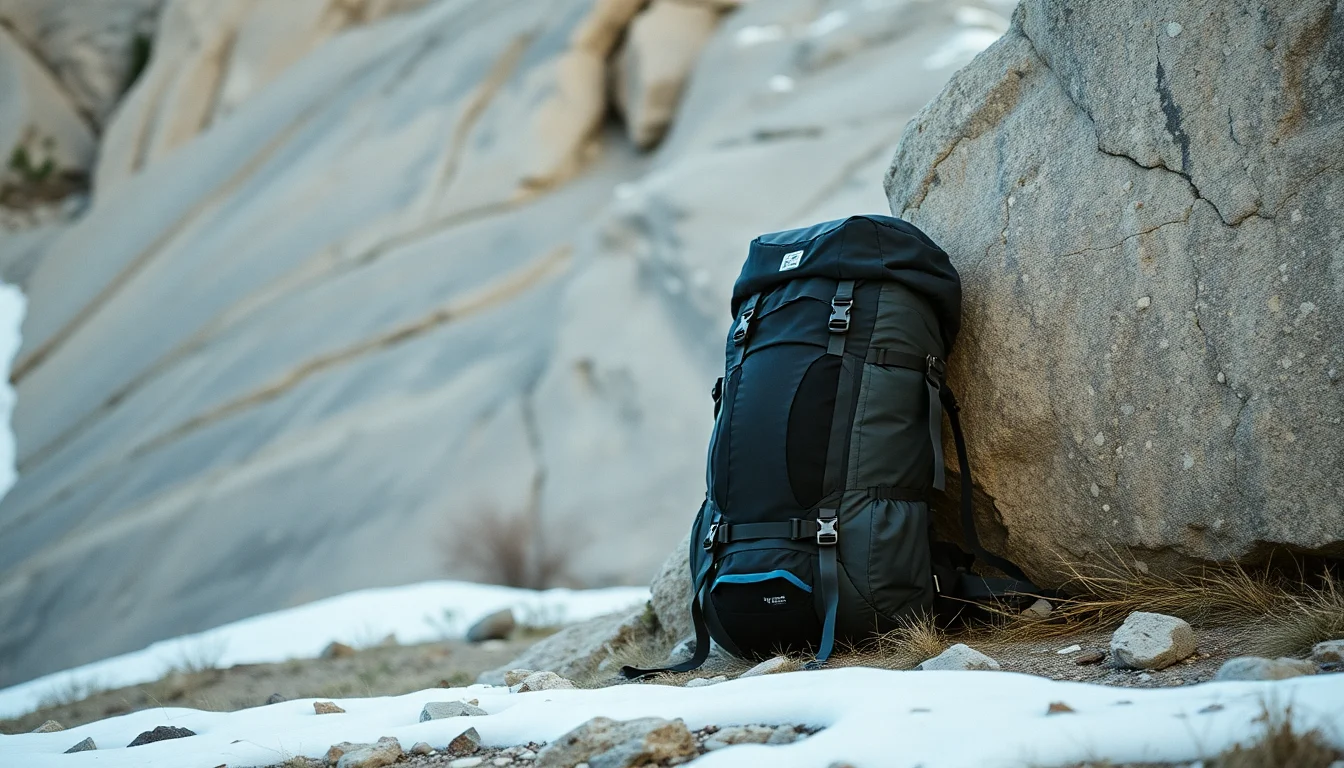
The Pacific Crest Trail — 2,650 miles from the California-Mexico border to Manning Park in British Columbia — is one of the longest continuous footpaths in the United States. Every year, several thousand hikers attempt it as a thru-hike, meaning they walk the whole thing in a single season, typically starting in April and finishing in October. That distance, across desert, mountains, and Pacific Northwest forest, means your gear has to earn its place: too heavy and you’ll grind your body down; too cheap and it fails when the Sierra throws a late-season snowstorm at you. This guide walks through the seven categories that matter most — pack, shelter, sleep system, stove, sleep pad, rain shell, and footwear — and gives you a specific, trail-tested recommendation in each one, plus the honest tradeoffs so you can adjust for your budget and style.
If you’ve already done a few overnight trips and you’re now looking at a thru-hike as your next move, you’re in the right place. We’re not going to explain what a hipbelt is. But we will show you the math on why saving three ounces on your shelter matters less than picking the right footwear, and which “ultralight” picks actually hold up past mile 1,000.
The Big Three: Pack, Shelter, Sleep System
These three categories — your pack (the bag you carry everything in), your shelter (tent or tarp), and your sleep system (sleeping bag or quilt plus pad) — account for roughly 60-70% of your base weight. Base weight is everything you carry minus food, water, and fuel. On the PCT, a base weight under 12 lbs is comfortable; under 10 lbs gives you real trail advantages on the long water carries in Southern California.
By the numbers — realistic PCT base weight targets (2026 pricing):
| Category | Budget pick | Weight | UL pick | Weight |
|---|---|---|---|---|
| Pack | Osprey Exos 58 (~$230) | 2 lb 11 oz | Zpacks Arc Haul Ultra 60L (~$399) | 1 lb 6 oz |
| Shelter | Big Agnes Copper Spur HV UL2 (~$550) | 2 lb 6 oz | Zpacks Duplex (~$699) | 1 lb 1 oz |
| Sleep system | Enlightened Equipment Revelation 20° (~$295) | 1 lb 6 oz | EE Enigma 20° Apex (~$299) | 1 lb 8 oz |
Pack
{anchor_paragraph_id: p-pack-fit} For a 2,650-mile thru-hike, pack fit is more important than any single weight savings. The Osprey Exos 58 is the high-volume, moderate-weight workhorse that most gear shops carry for fitting purposes — at 2 lb 11 oz and around $230, it’s the practical choice if you need hands-on sizing. The anti-gravity suspension distributes load well on long miles and the mesh back breathes genuinely better than most frameless options in the desert sections. REI’s Expert Advice article “How to Choose a Backpack” covers the fit variables — torso length, hip belt sizing, and load lifter angles — in detail worth reading before making a multi-month purchase decision.
If you’re committed to going lighter, the Zpacks Arc Haul Ultra 60L drops you to approximately 1 lb 6 oz (the manufacturer lists the weight as 22 oz / 624g on the Zpacks product page) at $399. The carbon fiber arc frame is real structural engineering, not a gimmick — it carries up to 35 lbs with reasonable comfort, which matters when you’re packing out 5-6 days of food from a remote Sierra resupply. The tradeoff: Zpacks ships direct, there’s no trying it on at a retail shop, and the DCF (Dyneema Composite Fabric) material is ultralight but not abrasion-resistant against granite. Verify current weight specifications and availability directly at zpacks.com before purchasing, as product specifications are updated periodically.
Decision rule: If you’re on your second backpacking trip and this is your first gear list, go Exos. If you’ve done at least a week-long trip and know your carry style, the Arc Haul pays back its weight savings every single day for five months.
Shelter
{anchor_paragraph_id: p-sierra-snow} The PCT has a shelter problem that most other long trails don’t: you need something that handles Southern California desert wind, Sierra passes with overnight snow potential in late May or June, and the wet Pacific Northwest coast — often in the same trip. OutdoorGearLab’s best backpacking tent testing consistently puts freestanding double-wall tents at the top for all-conditions reliability.
The Big Agnes Copper Spur HV UL2 at 2 lb 6 oz and ~$550 is the most-recommended “I want to do this once and right” tent on the PCT. It pitches fast, the HV (high-volume) geometry gives genuine livable space in a storm, and it’s been trail-proven by thousands of thru-hikers. You can find it at Backcountry.com or through REI and other major outdoor retailers.
The ultralight alternative is the Zpacks Duplex at 1 lb 1 oz and ~$699 — a trekking-pole shelter (meaning your trekking poles, which you’ll carry anyway for snow sections, become the tent poles). It’s genuinely exceptional when pitched taut, but it requires practice to set up in wind and has condensation challenges in humid Northwest conditions. Not the right call if this is your first trekking-pole shelter.
Sleep System
{anchor_paragraph_id: p-sierra-snow} A 20°F rating is the standard PCT recommendation, and it holds up. The Enlightened Equipment Revelation 20° quilt at 1 lb 6 oz (~$295) is the cottage-industry benchmark here — EE’s temperature ratings have consistently been honest in field testing, which is more than you can say for some down bag manufacturers. The quilt design (no zipper, no hood — just a sewn footbox and a top-of-bag layer) saves weight and runs warmer-feeling than the rated temp for most users.
If you run cold or want the insurance of a hood, the Western Mountaineering Ultralite 20°F sleeping bag at approximately 1 lb 13 oz and ~$595 is a gold-standard option in mummy bags — 850-fill goose down, excellent long-term durability, and a reputation for accurate temperature ratings among experienced long-distance hikers. Western Mountaineering publishes full specifications on their own site; verify current pricing and availability directly with the manufacturer or authorized dealers before purchasing.
Stove: The Canister vs. Alcohol Question
For a PCT thru-hike, this debate resolves faster than people think. Alcohol stoves (the DIY titanium or Caldera Cone setups beloved in ultralight circles) are genuinely weight-competitive — a complete system can weigh under 2 oz — but alcohol fuel availability in small-town PCT resupply stops is inconsistent. Canister gas availability is near-universal.
The MSR Pocket Rocket 2 at 2.6 oz and $55 is the practical PCT answer. It boils water fast, runs on isobutane canisters available in every outdoor shop near trail towns, and fits any standard canister. Find it on Amazon or at REI. If you want to shave weight and are willing to plan your resupply boxes carefully, the BRS-3000T at under 1 oz ($16 on Amazon at https://www.amazon.com/dp/B00ENVYEG6) is functionally near-identical to the Pocket Rocket at a fraction of the weight and cost. The tradeoff: the BRS is fragile — don’t let it rattle loose in your pack.
Decision rule: If you’re mailing resupply boxes (which most NOBO thru-hikers do for Sierra sections), put canister fuel in every box. Use the Pocket Rocket 2 or BRS-3000T; skip alcohol entirely unless you’ve already done a shakedown trip proving your fuel supply chain.
Sleep Pad: R-Value Is Not Optional in the Sierra
A sleep pad’s R-value measures how well it insulates you from the ground. Cold ground conducts heat away from your body faster than cold air — a 20°F-rated quilt on a 1.0 R-value pad will leave you shivering at 40°F. For PCT Sierra conditions, a minimum R-value of 3.5 is the floor.
The Therm-a-Rest NeoAir XLite NXT at 12 oz and R-4.5 (~$220) is the warm-sleeper’s choice — it’s been the ultralight inflatable standard for years, and the NXT version addressed the crinkle noise complaints that plagued earlier versions. Amazon link.
For budget-conscious thru-hikers, the Nemo Tensor Trail at 15 oz and R-3.5 (~$160) gives you enough insulation for Sierra overnights at reasonable cost. Available at Backcountry.com and other major outdoor retailers; verify current pricing directly before purchasing.
Rain Shell and Footwear: The Two Categories People Under-Budget
Rain Shell
On the PCT, a rain shell is most critical in the Pacific Northwest — roughly the last 500 miles — and during surprise thunderstorms in the Sierra. You do not need a 20 oz mountaineering hardshell. You need something under 10 oz that packs to a fist.
The Outdoor Research Helium Rain Jacket at 6.5 oz (~$199) is the trail-tested standard. It’s not a hardshell and won’t survive sustained heavy rain forever — no ultralight shell does — but it handles PCT rain events with enough pit-zip ventilation to keep you from overheating. Find it at Backcountry.com or Amazon.
Footwear
{anchor_paragraph_id: p-footwear-tradeoff} Most PCT thru-hikers wear trail runners, not boots. The dominant choices in 2025-2026 remain the Hoka Speedgoat 6 and the Altra Lone Peak 8 — both zero-drop (heel-to-toe height difference is zero) with wide toe boxes that accommodate foot swelling on high-mileage days. The Hoka offers more cushioning for rocky sections; the Altra offers better ground feel. You’ll go through 3-5 pairs on a full NOBO thru-hike regardless of brand. Most experienced PCT hikers recommend carrying microspikes (under 12 oz, ~$65) for early-season Sierra passes rather than switching to heavier boots — a strategy the Pacific Crest Trail Association addresses in their annual Snow and Weather planning guidance (available via pcta.org).
Decision rule: If you pronate significantly or have a history of ankle sprains, the Hoka Speedgoat’s added structure is worth the slight weight penalty over the Altra. If your feet are healthy and you want ground feedback, go Lone Peak.
The Bottom Line: If X, Then Y
The PCT is long enough that small daily gear decisions compound. Here’s how to read your situation:
- If your current base weight is over 20 lbs: Don’t buy anything ultralight yet. Fix the Big Three first — pack, shelter, sleep system account for most of the problem, and you can solve them for under $600 used.
- If your base weight is 12-20 lbs and you have one thru-hike budget: Prioritize the sleep system and pad (warm = happy = keeps walking) over pack weight savings.
- If your base weight is under 12 lbs and you’re optimizing: The shelter and pack are where the remaining grams hide. The Zpacks Duplex + Arc Haul combination is legitimate and proven — just do a shakedown week before your start date.
- If you have one category budget this season: Spend it on footwear. You’ll replace it anyway, but starting with the right fit prevents the blisters and tendon issues that end thru-hikes before the Sierra.
For permit planning and current trail conditions, consult the Pacific Crest Trail Association’s official thru-hike planning resources — specifically the PCTA’s PCT Long-Distance Permits page at pcta.org — before finalizing any gear decisions. Snow year and entry corridor availability shape the gear list more than any single review can.