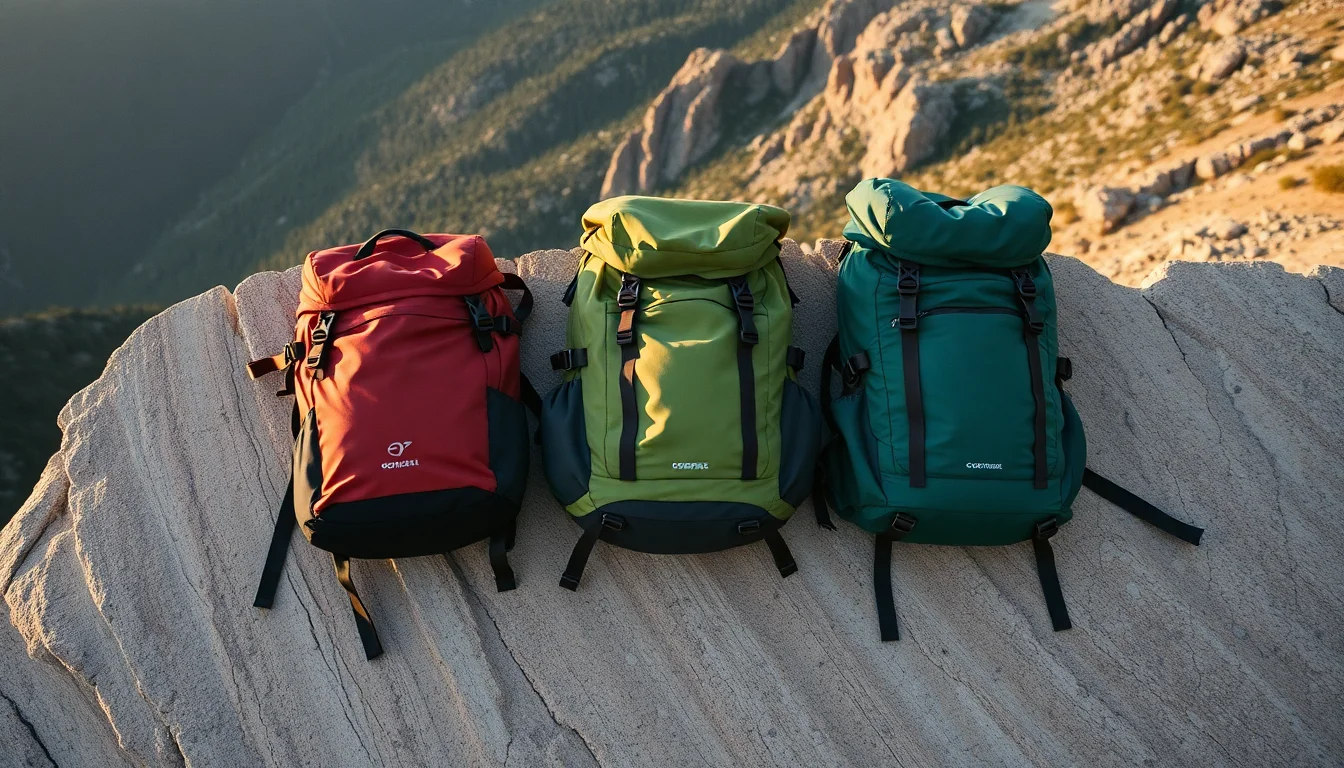
Your first backpacking pack probably got you where you needed to go. Maybe it was borrowed, maybe it was a department-store special, maybe it was a hand-me-down that fit okay once you tightened every strap. You made it work. Now you’ve done an overnight or two, you know you want to do more, and you’re ready to buy something that was actually designed for you. Good. This article is the buying framework you wish someone had handed you before you walked into an outdoor store and got overwhelmed by forty packs on a wall.
We’ll cover the five decisions that actually matter — how much volume (space) you need, what kind of frame to choose, how to size the pack to your body, what weight class fits your style, and how to read a price tag honestly. By the end, you’ll know what questions to ask, what specs to ignore, and which packs are worth shortlisting for your next trip.
How Much Volume Do You Actually Need? {#p-volume-intro}
Volume in backpacking packs is measured in liters — think of it like the size of a water tank that your sleeping bag, tent, food, and clothes all have to fit inside. A one-liter Nalgene bottle gives you a useful reference point: a 50-liter pack holds the equivalent of fifty of those bottles. In practice, packs in the 40–75L range cover almost every backpacking situation you’ll encounter.
Here’s the honest breakdown:
By the numbers:
| Trip length | Typical volume | Best for |
|---|---|---|
| 1–3 nights, warm/mild | 40–50L | Weekend warriors, ultralight setups |
| 3–5 nights, 3-season | 50–65L | Most backpackers, most trips |
| 5+ nights, winter or basecamp | 65–75L+ | Extended travel, bulky cold-weather gear |
The mistake most second-time buyers make is going too big. A 70L pack sounds like flexibility, but carrying 20L of empty air is demoralizing and encourages you to fill the space with stuff you don’t need. If you’re doing 3-season trips of three to five nights — which describes the majority of backpacking outings in the US — a 55–65L pack is a sweet spot. REI’s Expert Advice article How to Choose a Backpack consistently points toward this range for general-purpose buyers, and it’s the same guidance you’ll hear from staff at any competent gear shop.
One caveat: if you’re actively moving toward an ultralight kit (we’ll define that in a moment), you can often drop to a 40–50L pack even for multi-night trips, because your individual items are smaller and lighter. More on that below.
Frame Types: What’s Actually Holding Your Load {#p-frame-types}
A pack’s frame is the internal structure that transfers weight from your shoulders to your hips. This is not a cosmetic feature — it’s the engineering that determines whether a 35-pound load feels manageable or destroys your lower back by mile eight.
Internal frame packs have a rigid or semi-rigid structure built into the back panel — usually aluminum stays (thin metal rods) or a molded plastic sheet, sometimes both. They keep the load close to your body’s center of gravity, which makes them more stable on uneven terrain. This is what the vast majority of packs available today at retailers like Backcountry are. For any trip where you’re on trail — especially with 25+ pounds — an internal frame is the right answer.
External frame packs — the old-school aluminum ladder-frame design your parents might remember — are still made, but they’re a niche product. They ventilate your back better in heat and handle extremely heavy loads (50+ pounds) well, but they’re awkward on narrow or brushy trails. Unless you’re packing out elk quarters or doing a specific basecamp setup, skip these.
Frameless packs are ultralight backpacking’s answer: no rigid frame at all. Your sleeping pad — a foam mat you’d use under your sleeping bag — slides into a sleeve against your back and acts as the structure. These packs can weigh under a pound, but they require a very light overall kit, usually under 20 pounds, or they become uncomfortable fast. Section Hiker’s How Much Should a Backpack Weigh goes deep on the load limits that make frameless packs practical; the short version is that this is probably not your second-pack purchase unless you’ve already rebuilt your sleep system and shelter around ultralight principles.
Semi-frameless or hybrid packs — like the Gossamer Gear Mariposa or the Hyperlite Mountain Gear 2400 Southwest — sit between those extremes. They use a minimal stay or structured back panel for light support without the full weight of a traditional frame. These are a great target for your second pack if you’re in transition toward ultralight but still want real carry comfort.
Fitting a Pack to Your Body (This Is the Step Everyone Skips) {#p-torso-fit}
Here is the thing that will save you from months of shoulder pain: packs are sized by torso length, not by your overall height. Torso length is the distance from the bony bump at the base of your neck (called the C7 vertebra — you can feel it by tilting your chin down) to the top of your hip bones. Two people who are both 5’10” can have torso lengths that differ by four inches. If you put the wrong torso size on your back, no amount of strap adjustment fixes it.
Most packs come in Small/Medium/Large torso sizes, and a few — like the Osprey Atmos or the Gregory Baltoro — have adjustable torso systems where you can move the shoulder harness up or down on the frame. For a second-time buyer who’s still dialing in fit, an adjustable-torso pack is worth the extra $30–50. You might discover after a long trip that you need to drop half an inch, and you can fix it on the spot.
Hipbelt fit matters almost as much. The hipbelt — the padded belt that wraps around your hips at the top of your pelvis — should sit on your iliac crest, the shelf of bone at the top of your hips, not on your waist. A properly fitted hipbelt transfers 70–80% of your pack’s weight to your hips and legs, which can carry load all day. Shoulder straps should guide the load, not bear it. Backpacker Magazine’s How to Fit a Pack walks through the exact hands-on process in detail, including how to check harness contact points and load-lifter angle — worth reading before your first in-store fitting.
Our recommendation: get measured at a physical gear shop — REI, EMS, or a local outfitter — before you buy, even if you plan to purchase online. The measurement takes five minutes and most shops will do it for free.
Weight Classes: Where Do You Actually Fall? {#p-weight-class}
Pack weight is measured in the base state — just the empty pack, no gear loaded. This “empty pack weight” is a real cost you’re carrying every single mile, so it matters. Here’s how the market breaks down in 2026:
- Traditional/loaded packs (4.5–7+ lbs empty): Osprey Aether, Gregory Baltoro, Deuter Aircontact. Maximum comfort, maximum organization features, maximum durability. The right call if you regularly carry 35+ pounds or if hip and back comfort is your top priority.
- Midweight packs (2.5–4.5 lbs empty): Osprey Exos/Eja, REI Co-op Trail 40, Zpacks Arc Haul Scout. The current sweet spot for most second-pack buyers. Meaningfully lighter than traditional packs without the compromise of true ultralight.
- Ultralight packs (under 2 lbs empty): Gossamer Gear Mariposa, Hyperlite Mountain Gear 2400, Zpacks Arc Blast. Significant weight savings, but designed for light kits and hikers who’ve already optimized their shelter, sleep, and clothing systems.
OutdoorGearLab’s backpacking pack reviews consistently test across all three tiers with real load data and side-by-side carry testing — it’s the most rigorous independent comparison available and worth checking before you finalize any shortlist.
The cost-per-ounce-saved math gets harsh above the midweight tier. Dropping from a 4.5 lb pack to a 1.5 lb ultralight option saves you 3 pounds — but that jump often costs $200–400 more and requires you to carry a genuinely light kit or suffer for it. For most second-pack buyers, landing in the midweight tier and putting the saved money toward a better sleep system or lighter shelter is the smarter move.
Shop by Use Case: Quick Starting Points
Rather than wade through every option, here are anchored starting points by how you hike:
Weekend warrior, warm weather, wants to go lighter: The Osprey Exos 58 (men’s) or Eja 55 (women’s) is one of the most consistently recommended midweight packs on the market — adjustable torso, solid hipbelt, under 3 lbs. It’s a real upgrade without requiring you to rebuild your entire kit.
3–5 night trips, carrying a real load, comfort first: The Gregory Baltoro 65 or Osprey Atmos AG 65 are the workhorses here. Heavier empty packs, but their suspension systems earn every ounce on 30+ pound loads.
Already committed to ultralight, light kit in place: The Gossamer Gear Mariposa 60 is a cottage-brand classic — 1 lb 13 oz empty, intelligently organized, tested over hundreds of thousands of trail miles by the ultralight community. Not cheap, but it earns its reputation.
Budget-conscious second pack: The REI Co-op Trail 40 punches above its price. It’s not the lightest option in the midweight tier, but it gives you a genuinely fit-adjustable pack with solid durability at an accessible price point — a real step up from a borrowed or entry-level first pack.
Before You Buy: The Checklist
You don’t need to memorize everything above. Before you pull the trigger on any pack, run through these five questions:
- What’s my trip length and typical load weight? Match volume and frame type to that reality, not to your aspirational heaviest trip.
- Do I know my torso length? If not, get measured before buying.
- Have I tried the hipbelt loaded? A hipbelt that fits empty often feels different with 35 pounds in the bag.
- What’s the verified trail weight? Manufacturer specs can be optimistic — look for independent weigh-ins from review sites like OutdoorGearLab or gear communities.
- Am I buying for my current kit or my future kit? If you’re planning to go ultralight, don’t buy a 6-lb traditional pack to carry an ultralight setup — the math doesn’t work.
Your second pack should be the one you stop thinking about on the trail. When a pack fits right and holds your load properly, it disappears into the background, and the miles become about the scenery and not your shoulders. That’s the whole point — and it’s completely achievable with an honest look at what you actually need.
Use our Backpack Finder tool (linked in the site nav) to filter by torso size, volume, and weight class — it pulls verified weights and links directly to current pricing at Backcountry and other major retailers.