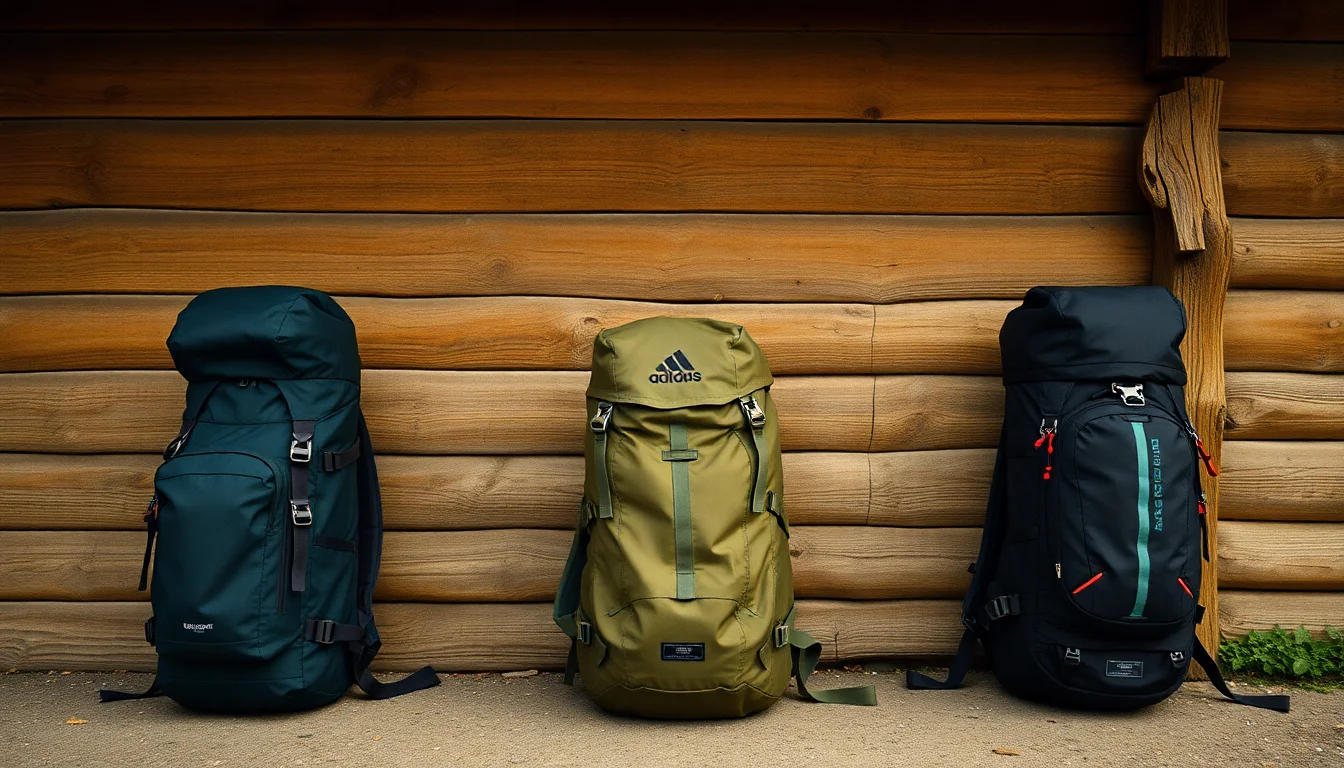
If you’ve been on one or two backpacking trips and you’re starting to think your borrowed or entry-level pack is holding you back, you’ve probably noticed that “backpack” covers a lot of ground. There are packs designed to carry heavy loads in relative comfort, packs engineered for a specific sweet spot of weight and features, and packs built around a single obsession: getting every gram off your back. Choosing wrong can mean a trip where your shoulders hate you by mile five, or a $400 purchase that doesn’t match how you actually hike. This article puts three well-regarded packs side by side — one from Osprey, one from Gregory, one from a cottage manufacturer called Hyperlite Mountain Gear — so you can figure out which tier makes sense for you right now.
The key variable is your base weight — that’s the weight of your loaded pack minus food, water, and fuel, the consumables that change every trip. If you don’t know your base weight yet, weigh your packed-up gear at home before your next trip. Most people coming off their first overnight land somewhere between 18 and 30 pounds base weight. Where you fall on that spectrum is the fastest shortcut to which of these three packs belongs on your back.
The Three Packs, in Plain Terms
Before we get into the head-to-head, here’s the fast version of what each pack is:
- Osprey Atmos AG 65 — A 65-liter (think: enough room for 4–6 nights of three-season gear) pack with an advanced ventilated suspension system. It’s a comfort-first mainstream pack aimed at hikers carrying moderate loads.
- Gregory Baltoro 65 — Also 65 liters, but built around hauling heavy loads — think winter camping gear, group food, or camera kits — with a load-transfer frame that earns its extra weight when the pounds go up.
- Hyperlite Mountain Gear Southwest 3400 — A frameless, ~55-liter pack (3,400 cubic inches) made from DCF, or Dyneema Composite Fabric, an extremely light and water-resistant sailcloth-like material. The whole empty pack weighs around 26 ounces. No frame, no padding theater — just carry capacity and trail miles.
Side-by-Side Comparison
| Pack | Capacity | Advertised Weight | Typical Trail Weight* | Price (May 2026) | Best For |
|---|---|---|---|---|---|
| Osprey Atmos AG 65 | 65 L | 4 lb 9 oz | ~4 lb 12 oz | ~$270 | 3-season moderate loads, 3–7 nights |
| Gregory Baltoro 65 | 65 L | 5 lb 1 oz | ~5 lb 4 oz | ~$340 | Heavy loads, technical trips, 4–10 nights |
| Hyperlite Southwest 3400 | ~55 L | 26 oz | ~1 lb 12 oz | ~$320 | Ultralight 3-season, base weight under 15 lb |
*Verified trail weights tend to run 2–5% heavier than manufacturer specs due to included stuff sacks, straps, and hardware; figures above reflect community-reported measurements consistent with OutdoorGearLab testing methodology.
Osprey Atmos AG 65: The Comfortable Middle Ground
The Atmos has been Osprey’s flagship three-season pack for years, and the AntiGravity (AG) suspension — a tensioned mesh trampoline back panel that keeps the pack floating off your spine — is the reason people keep buying it. On warm days, you’ll actually feel a difference versus a foam-padded back panel. OutdoorGearLab has ranked it at or near the top of mainstream 65-liter packs for multiple seasons running, citing its suspension ventilation and fit system as standout qualities among tested competitors (OutdoorGearLab, Best Backpacking Packs 2025).
Where it earns its place: loads in the 20–35 pound range, three-season conditions, trips where comfort over miles matters more than shaving weight. The hip belt is cushy, the organization is thoughtful — front pocket, hip belt pockets, top lid, stretchy side pockets — and the fit adjustment system is one of the best in class if you’re between torso sizes.
Where it loses: the pack itself weighs nearly 4 lb 12 oz on the trail. If your goal is to get your total pack weight (the whole thing, full) under 25 pounds, the Atmos is spending a meaningful chunk of your weight budget just existing. It’s also not built for savage loads — once you push north of 40 pounds, the frame flexes in ways the Baltoro doesn’t.
→ Check the Osprey Atmos AG 65 on Backcountry
Gregory Baltoro 65: When You’re Actually Carrying a Lot
The Baltoro exists for one reason: hauling heavy loads without destroying your body. Gregory’s Response A3 hip belt — which pivots in three axes to follow your hip movement — is a legitimate differentiator once you load this pack past 35 pounds. Below that threshold, you probably won’t feel the difference between the Baltoro and the Atmos. Above it, you will.
This is the pack for people who bring a real camera system, who do snow travel and need an ice axe and crampons, who feed four people out of a group bear canister, or who do long enough trips that caloric density hasn’t been optimized and their food bag alone weighs 12 pounds. The Baltoro is heavier than the Atmos empty, but it earns that weight at the high end of the load range.
The downside is exactly that weight. At over 5 pounds empty, the Baltoro is a meaningful anchor on a lighter trip. It’s also big — 65 liters is a lot of pack to pack, and many Baltoro buyers end up using 40 of those liters on a standard three-season outing. Section Hiker has covered this pattern in depth: hikers tend to buy packs sized for their worst-case scenario and then haul extra volume and frame weight on every other trip (Section Hiker, Ultralight Backpacking Pack Guide).
Organization is excellent — the Baltoro has a full sleeping bag compartment with divider, a cavernous front pocket, two hip belt pockets, and a top lid with multiple access points. If you want a pack that organizes gear the way a rolling suitcase does, this is it.
→ Check the Gregory Baltoro 65 on Backcountry
Hyperlite Southwest 3400: The Pack for the Converted
The Southwest 3400 is built on a different assumption: that a well-designed frameless pack carrying a light load is more comfortable than a heavy framed pack carrying the same load. This is actually true, which is why ultralight backpacking — the practice of systematically reducing base weight, typically targeting under 10–15 pounds — has continued to grow as a practice. Section Hiker covers the methodology and gear tradeoffs in depth in their ongoing ultralight series (Section Hiker, Ultralight Backpacking Pack Guide).
The DCF shell is what people notice first. It’s crinkly, it’s white, and it looks fragile. It isn’t — puncture resistance is good, and the waterproofness is genuine, not just DWR-coated nylon that soaks through after two hours of rain. What DCF doesn’t tolerate well is sustained grinding abrasion against rough rock, and seam care matters. This is a pack that rewards careful use, not a bombproof toss-it-anywhere hauler.
The Southwest has no frame, no foam back panel, and minimal structure. To carry well, it needs a sleeping pad slid inside to act as a makeshift frame — this is standard practice in the ultralight community. Hip belt padding is minimal, because at a 15-pound base weight, you don’t need much. Load it to 30 pounds and you’ll feel every ounce of missing structure.
At roughly $320 direct from Hyperlite Mountain Gear, it costs as much as the Baltoro despite being simpler in construction. You’re paying for the DCF material and the weight savings, not for features. That’s a fair trade if you’ve committed to ultralight. It’s a frustrating trade if you haven’t. Hyperlite sells direct through their own storefront at hyperlitemountaingear.com; current pricing and colorway availability is listed there.
The Math: Cost-Per-Ounce-Saved vs. Atmos Baseline
If you’re considering the ultralight transition, here’s the weight delta math from the Osprey Atmos baseline:
By the numbers:
- Atmos trail weight: ~76 oz
- Baltoro trail weight: ~84 oz (+8 oz heavier)
- Southwest trail weight: ~28 oz (−48 oz lighter)
- Weight savings, Southwest vs. Atmos: 3 lbs
- Price premium, Southwest vs. Atmos: ~$50
- Cost per pound saved: ~$17/lb — among the most efficient weight savings available in any gear category
Three pounds off your back is meaningful on a long day. At $17 per pound saved — compared to $50–$80/lb for ultralight shelter or sleep system upgrades — the pack swap is often the most economical weight reduction a transitioning hiker can make. OutdoorGearLab’s multi-season pack testing has consistently flagged pack weight as one of the highest-leverage categories for overall base-weight reduction (OutdoorGearLab, Best Backpacking Packs 2025).
Decision Rules: If X, Then Y
Stop reading and pick your pack based on where you actually are, not where you hope to be in two years:
If your base weight is 20–35 lb and you value comfort over miles: → Osprey Atmos AG 65. Best suspension per dollar in this range, well-organized, proven across three-season conditions. The mainstream choice that earns its reputation.
If your base weight regularly hits 35–50 lb, or you’re doing technical mountaineering, winter camping, or multi-week expedition-style trips: → Gregory Baltoro 65. The Response A3 hip belt and load-bearing frame earn their weight above 35 lb. Don’t buy this for light trips — it’ll just feel heavy.
If your base weight is at or below 15 lb, or you’re actively working to get there with a quilt, tarp/DCF shelter, and carbon trekking poles: → Hyperlite Southwest 3400. The frameless design works when your load works with it. Don’t buy this as aspiration gear if your sleep system still weighs 4 pounds.
If you’re in transition — base weight 15–20 lb and falling: → Consider the Atmos now and revisit the Southwest in 12 months once your sleep system and shelter upgrades are locked in. Buying a frameless pack before you’ve lightened your other systems is doing it backwards.
The pack that matches your current base weight will always feel better than the pack that matches your future aspirations. Buy for the hiker you are on your next three trips, not the hiker you’re becoming.