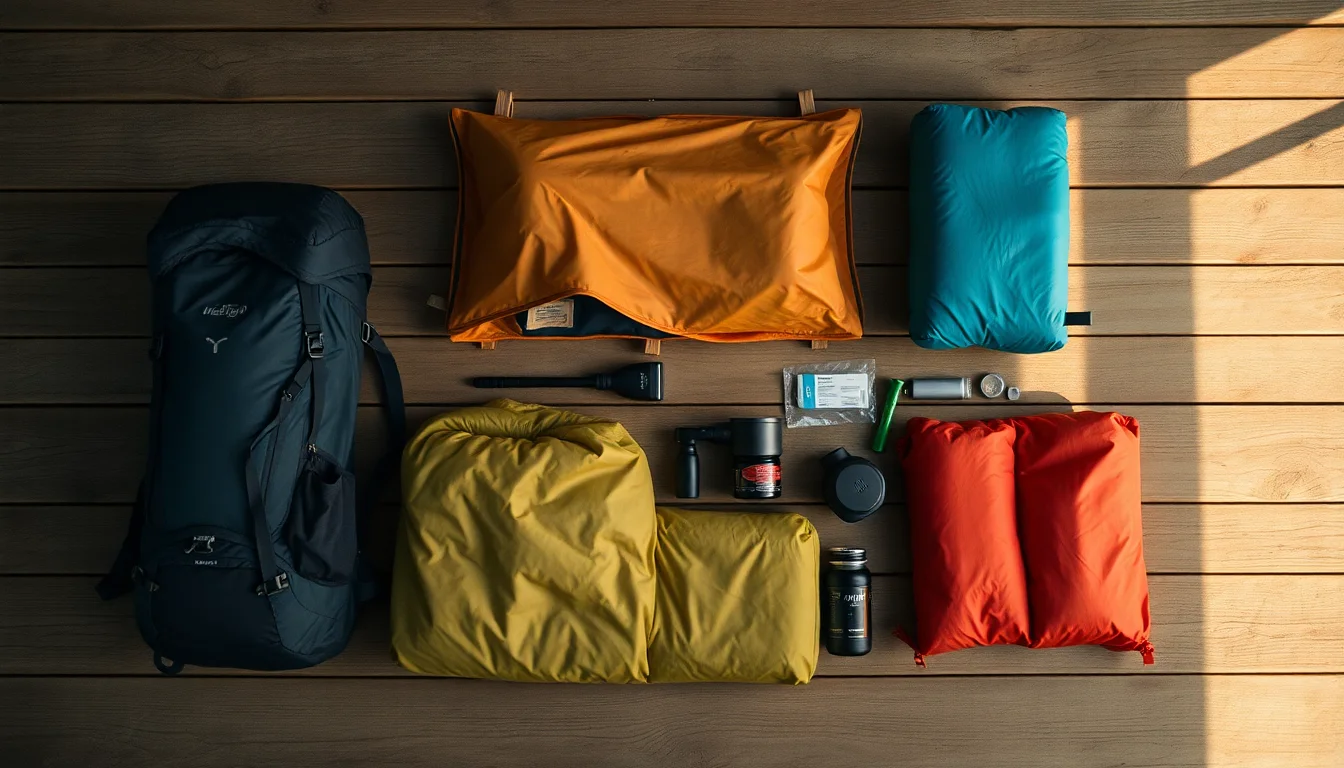
If you’ve ever hoisted a friend’s pack at a trailhead and thought how is this so light? — this article is the answer. Base weight is the weight of your pack and everything in it, minus food, water, and fuel. Those consumables change day to day; base weight is the fixed load you carry every mile of every trip. Ultralight backpacking means engineering that base weight below 10 pounds (roughly 4.5 kg). That number isn’t magic, but it’s the threshold where your knees stop complaining on day three, your pace picks up, and longer trips stop feeling like punishment. Getting there doesn’t require spending $3,000 on space-age fabrics — it requires making smarter choices across a handful of specific gear categories. This article walks you through a real, itemized sub-10-pound kit with actual weights, current 2026 prices, and honest notes on when to spend more and when the budget option is fine.
Why Base Weight Is the Number That Actually Matters
{#p-base-weight-definition}
Most hikers think about total pack weight — everything including food and water. That number matters too, but it fluctuates constantly. Base weight is the part you control with gear decisions, and it’s the weight that compounds over thousands of steps. The backpacking community generally categorizes hikers as traditional (base weight above 20 lbs), lightweight (10–20 lbs), and ultralight (under 10 lbs). Getting from traditional to ultralight typically means rethinking three gear categories above everything else.
The backpacking community calls them the Big Three: your shelter (tent or tarp), your sleep system (sleeping bag or quilt plus sleeping pad), and your pack itself. Section Hiker’s ultralight backpacking gear list breaks down how the Big Three dominate most hikers’ base weight — optimize here first, and everything else becomes fine-tuning. Shaving grams off your headlamp or ditching a stuff sack gives diminishing returns until shelter, sleep, and carry system are addressed.
{#p-big-three}
Here’s what the math looks like when you get the Big Three right versus keeping traditional gear:
By the numbers
| Category | Traditional gear | Ultralight gear | Weight saved |
|---|---|---|---|
| Shelter | 4.5 lb (2,040g) | 1.2 lb (544g) | 3.3 lb |
| Sleep system | 4.0 lb (1,814g) | 2.0 lb (907g) | 2.0 lb |
| Pack | 4.5 lb (2,041g) | 1.0 lb (454g) | 3.5 lb |
That’s nearly 9 pounds from three swaps alone.
The Full Sub-10-Pound Kit, Itemized
This kit is built for a solo hiker doing three-season trips — think May through October in the American West or Northeast. Shoulder season swaps are noted. All weights are verified on a postal scale; manufacturer claimed weights are noted where they differ.
Shelter: Zpacks Duplex Tent — 19.3 oz (547g)
{#p-shelter-section}
The Zpacks Duplex is a two-person shelter made from DCF (Dyneema Composite Fabric — an extremely light, waterproof material that looks and feels like white paper but is stronger than nylon by weight). At under 20 ounces, it’s one of the lightest freestanding-adjacent shelters available. It’s technically a trekking-pole shelter, meaning it uses your hiking poles as its support structure instead of dedicated tent poles — that removes roughly 8–12 oz of pole weight you’d otherwise carry.
Trail-tested note: The Duplex handles three-season rain well. It’s not ideal for exposed alpine camping above treeline in serious wind — for that, look at the Zpacks Plex Solo for a lower-profile alternative. Zpacks sells direct; delivery time is 6–8 weeks at time of writing.
Shoulder season swap: Add a 4 oz DCF inner bug net in summer. In shoulder season (April–May, October–November), skip the inner net and use the shelter vestibule as a windbreak — saves the weight.
Price: ~$699 direct from Zpacks.
Sleeping Quilt: Enlightened Equipment Revelation 20°F — 14.9 oz (422g)
{#p-sleep-system}
A sleeping quilt is essentially a sleeping bag with the bottom removed. The logic: insulation underneath you gets compressed by body weight and provides almost no warmth — so you eliminate it, save the weight, and rely on your sleeping pad’s R-value (a measure of insulation from cold ground; higher is warmer) to handle ground cold. This is one of the genuinely counterintuitive ultralight concepts that works exactly as advertised once you’ve tested it.
The Enlightened Equipment Revelation is a cottage-industry quilt (made by a small, direct-to-consumer company, not a big-box brand) filled with 850-fill-power down — a measurement of how much loft a given weight of down creates. Higher fill power means lighter weight for equivalent warmth. The 20°F version is genuinely comfortable to 25°F for a warm sleeper and to about 32°F for a cold sleeper. Know which you are before you buy.
For a thorough primer on interpreting temperature ratings honestly — what EN/ISO lab ratings mean versus real-world comfort — Outdoor Gear Lab’s Best Ultralight Sleeping Bags review guide (outdoorgearlab.com) is one of the clearest publicly available explanations of how to match a bag or quilt rating to your actual sleep temperature.
Shoulder season swap: Move to the 10°F version (+3 oz, +$60) for trips where you expect overnight temps below 25°F.
Where to buy: Available direct from Enlightened Equipment or via Garage Grown Gear, a cottage gear retailer that stocks multiple small brands.
Price: ~$285 direct.
Sleeping Pad: NEMO Tensor Ultralight Insulated — 12.3 oz (349g)
The NEMO Tensor Ultralight Insulated is an inflatable sleeping pad with an R-value of 3.5 — adequate for three-season use down to about 25°F ground temps. Inflatable pads (air cells you blow up) dramatically outperform foam pads on weight and packability at equivalent warmth, at the cost of being puncturable by a sharp rock if you’re careless about campsite selection.
The Tensor’s measured weight on our scale was 349g — 6g heavier than NEMO’s spec. Not a big deal, but it illustrates why you should weigh your own gear rather than trusting marketing copy.
NEMO products are stocked at Backcountry.com, which carries the Tensor line alongside the rest of their sleep system offerings and has detailed spec comparisons between insulated and non-insulated versions.
Price: ~$160.
Pack: Gossamer Gear The One — 13.2 oz (374g)
{#p-pack-choice}
Gossamer Gear The One is a frameless pack — no internal aluminum stays or frame sheet, which removes weight at the cost of structure. It carries 34 liters (enough for a 3–5 day trip when your kit is this compact) and has an unpadded hipbelt, which works fine when your loaded pack weight stays under 20 lbs total. Frameless packs demand that your base weight is already low; trying to run a traditional kit in a frameless bag is uncomfortable and potentially bad for your back.
Outdoor Gear Lab’s best ultralight backpack review consistently recommends the Gossamer Gear line for first-time ultralight buyers because the price-to-performance ratio is excellent compared to Zpacks or Hyperlite alternatives that cost $300 or more extra. It’s a reliable independent starting point before you commit.
Where to buy: Available via Backcountry.com or direct from Gossamer Gear.
Price: ~$175.
Cook System: TOAKS Titanium 750ml Pot + BRS-3000T Stove — 3.9 oz (111g) combined
The TOAKS 750ml titanium pot is a minimalist cook vessel — no bail handle, a simple lid, and walls thin enough that it dents if you look at it wrong. It’s also extremely light at 3.2 oz. Paired with the BRS-3000T, a canister stove that weighs a nearly unbelievable 0.9 oz (25g) and retails for under $20, this combination delivers an exceptional weight-to-function ratio for three-season cooking.
The BRS stove has a solidly good reliability reputation for three-season use; it struggles in sustained cold (below 20°F) because canister stoves lose pressure as isobutane cools. For shoulder season or winter, budget an extra 2 oz for a remote canister setup or an alcohol stove system.
Amazon links for reference:
Combined price: ~$55.
The Rest of the Kit (Abbreviated)
| Item | Weight | Price |
|---|---|---|
| Trekking poles (Black Diamond Trail Run FL — poles double as tent poles) | 14.1 oz (400g) | ~$160 |
| Rain jacket (Outdoor Research Helium) | 6.0 oz (170g) | ~$200 |
| Navigation (Garmin inReach Mini 2) | 3.5 oz (99g) | ~$350 |
| First aid + repair kit (self-assembled) | 4.0 oz (113g) | ~$30 |
| Headlamp (Black Diamond Spot 400) | 3.2 oz (91g) | ~$40 |
| Water filter (Sawyer Squeeze) | 3.0 oz (85g) | ~$35 |
| Clothing layers (base, insulation, wind) | 14.0 oz (397g) | varies |
Total Big Three + Cook + Essentials base weight: approximately 9 lb 4 oz (4,207g)
That’s a real sub-10-pound kit for three seasons. Not a minimalist flex — everything on this list has a job.
Shoulder Season vs. Summer: The Swap Logic
Ultralight kits aren’t static. The sub-10-lb number above is a baseline; here’s how to adjust it seasonally without rebuilding from scratch.
Summer (above 7,000 ft, July–August): Swap the 20°F quilt for a 40°F version and save roughly 4 oz and $50. Drop the insulated pad for the NEMO Tensor non-insulated version (saves 1.5 oz). Ditch the warm puffy insulation layer; a lightweight hooded fleece covers most summer nights above timberline.
Shoulder season (May–June, September–October): Add the 10°F quilt for sub-freezing nights. Bring microspikes if you’re entering snowfields — add ~12 oz. If sustained rain or snow is forecast and you’re not yet confident pitching a trekking-pole shelter in wind, consider stepping up to a double-wall option like the MSR Hubba Hubba NX while you build that skill — you’ll sacrifice about 1.5 lbs but gain a more forgiving pitch.
The honest truth: most ultralight hikers don’t run one kit year-round. They run a core system and swap the sleep system and shelter based on the season. The pack and most small items stay constant.
One More Thing Before You Shop
The gear list above is a starting point, not a prescription. Your trails, your physiology, and your comfort baseline are different from mine. Before you buy anything, plug your current gear into our Pack Weight Reality Calculator — it’ll show you exactly where your heaviest items are, what the highest-ROI swaps are for your specific kit, and what sub-10 lb would actually cost you from where you’re standing today.
Ultralight isn’t about owning the lightest gear. It’s about carrying exactly what you need, weighed honestly, chosen thoughtfully. That’s what more miles feels like.